
Cross-docking staffing services connect distribution operations with workers who can receive, sort, stage, scan, and move goods quickly from inbound trailers to outbound shipments. For a job seeker, this type of work can offer a practical entry into warehouse and logistics jobs in South Dallas, Lancaster, DeSoto, Hutchins, Wilmer, Waxahachie, Ennis, and nearby DFW communities. This guide explains what cross-docking means, which jobs are common, what employers look for, and how to prepare for a first shift.
Talk with Eclipse about your next warehouse opportunity
What are cross-docking staffing services?
Cross-docking is a distribution method in which incoming goods are moved through a facility with little or no long-term storage. A shipment may arrive at one dock, be unloaded and checked, sorted by destination, and transferred to an outbound trailer. The goal is a smooth handoff rather than placing every item into storage for later retrieval.
Cross-docking staffing services supply people for the hands-on work that makes those handoffs possible. Depending on the facility, an assignment may include unloading trailers, scanning cartons, building pallets, wrapping loads, staging freight, loading outbound trailers, or recording exceptions. Some roles involve powered equipment, while others focus on manual material handling, sorting, counting, or quality checks.
The work is time-sensitive. A delay at receiving can affect sorting and loading, and an incorrect scan can send freight to the wrong destination. That is why reliable attendance, careful communication, safe work habits, and the ability to follow a process matter as much as speed.
How does a cross-docking operation work?
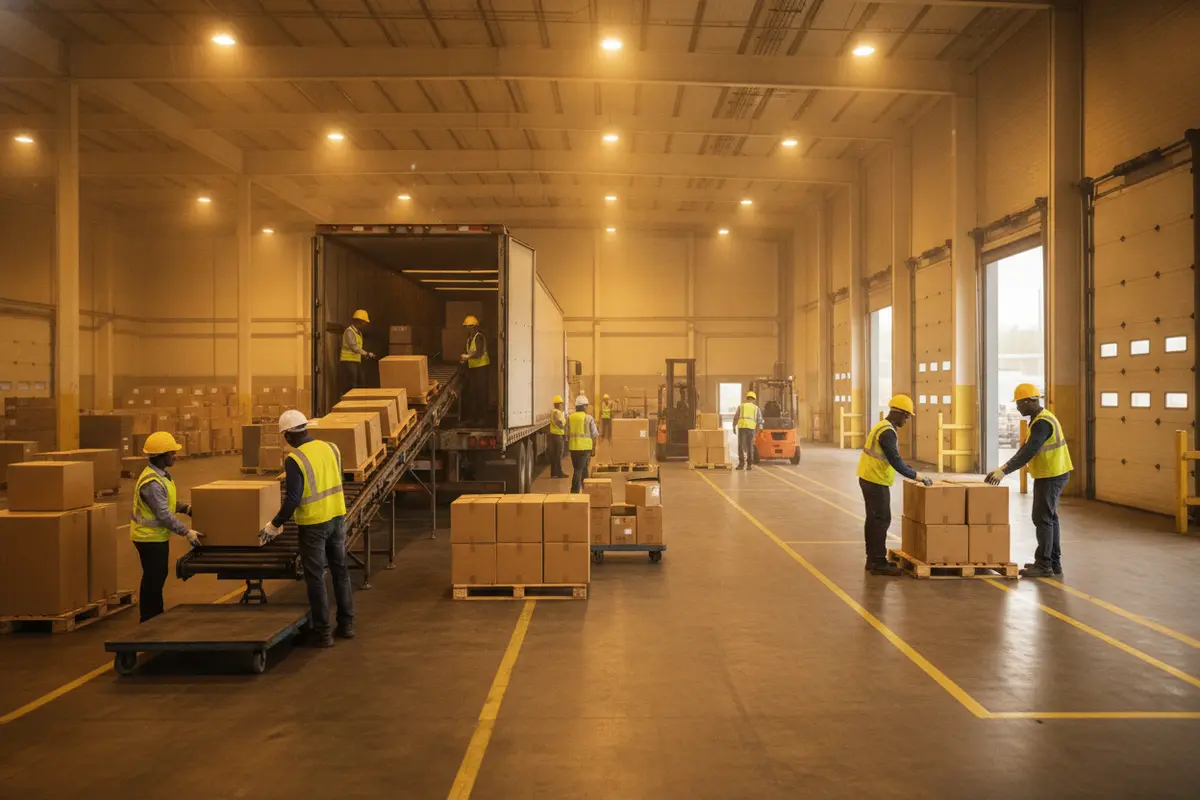
A cross-dock usually follows a connected sequence. The exact layout and technology vary by employer, but a worker can expect several related stages.
- Inbound arrival: A trailer reaches a scheduled dock door. The receiving team confirms the load, checks paperwork or system information, and begins unloading.
- Unload and scan: Workers remove cartons, pallets, or other freight. Barcodes may be scanned so the operation can track where each item belongs.
- Sort by destination: Freight is separated by route, store, customer, carrier, or outbound trailer. Clear labels and accurate counts help prevent misdirected shipments.
- Stage for loading: Sorted goods are placed in a designated lane or dock area. Workers may build stable pallets, wrap loads, or position freight in an order that supports loading.
- Outbound loading: The team loads the correct freight onto the correct trailer, following weight, sequence, and safety instructions.
- Closeout: The team finishes scans, reports shortages or damage, clears the area, and prepares for the next inbound or outbound movement.
Because these stages are connected, cross-docking jobs reward workers who stay aware of their surroundings and communicate early. If a carton is damaged, a label is missing, or a lane is full, reporting the issue promptly is better than quietly moving the problem downstream.
Which jobs are common in cross-docking staffing services?
Job titles differ between employers, but many cross-dock assignments fall into a few practical categories. Read the complete posting carefully because equipment, schedule, lifting expectations, and training can vary.
| Role or assignment | Typical focus | Helpful preparation | Questions to ask |
|---|---|---|---|
| Dock worker | Unload and load freight, move materials, keep dock areas organized | Safe lifting, pace, teamwork, awareness around trailers | What are the shift, lifting, and trailer requirements? |
| Sorter or scanner | Read labels, scan items, sort freight by destination, flag exceptions | Accuracy, basic device comfort, attention to detail | Which scanner or system will I use? |
| Palletizer or loader | Build stable loads and stage freight for outbound movement | Safe stacking, wrapping, organization | How are loads sequenced and checked? |
| Material handler | Move freight manually or with approved equipment | Equipment awareness and compliance with site rules | What equipment training is provided? |
| Forklift operator | Move pallets or containers with powered industrial equipment | Relevant experience and employer-required evaluation | What authorization or assessment is required? |
A staffing recruiter can help match your experience to the assignment instead of assuming every warehouse job has the same requirements. Eclipse focuses on warehouse, logistics, transportation, and manufacturing staffing, so a conversation can help clarify whether a cross-dock opening fits your background and schedule. You can also review current jobs from Eclipse or browse warehouse and forklift opportunities in South Dallas.
What skills do employers look for?
Cross-docking employers commonly value dependable attendance, safe movement, and accurate execution. You do not need to claim experience you do not have. Instead, explain the tasks you have performed and the habits that transfer to a dock environment.
- Reliability: Arrive on time, follow the attendance process, and communicate as soon as a problem could affect your shift.
- Safety awareness: Follow pedestrian routes, stay clear of moving equipment, use required protective equipment, and ask when an instruction is unclear.
- Accuracy: Match labels, counts, locations, and scans. Small errors can create larger shipping problems.
- Physical readiness: Be prepared for standing, walking, bending, reaching, and repeated handling within the job’s stated requirements.
- Team communication: Coordinate with unloaders, sorters, loaders, leads, and drivers without abandoning the work standard.
- Adaptability: A dock may change priorities when a trailer is late, freight is damaged, or volume shifts.
Some employers may use job-specific, cognitive, or behavioral assessments. Eclipse uses Skill Check assessments among its screening tools, with more than 500 assessments available across different job needs. A screening process is not a promise of placement, but it can help identify a role that better matches your skills and the employer’s requirements.
View available warehouse and logistics jobs
How should you prepare before applying?
Preparation can make an application and first conversation more useful. Start with the facts an employer or recruiter will need to determine fit.
- List relevant experience: Include warehouse, shipping, receiving, production, delivery, retail stock, loading, moving, or other work that required accuracy and physical activity.
- Record equipment experience: Note forklifts, pallet jacks, scanners, stretch wrappers, conveyors, or other tools you have used. Do not list equipment you have not operated.
- Clarify your schedule: Know which shifts, days, overtime arrangements, and commute distance you can realistically accept.
- Prepare work history: Have dates, employer names, job duties, and contact information available. Explain employment gaps briefly and honestly.
- Plan transportation: Cross-dock work often begins early, ends late, or follows a fixed shift. Confirm how you will reach the site reliably.
- Ask about the assignment: Find out the location, job duties, safety expectations, pay structure, schedule, required clothing, and next steps before accepting.
For local workers, commute planning matters. Eclipse serves the South Dallas and Northern Ellis County footprint, including Lancaster, DeSoto, Duncanville, Hutchins, Wilmer, Oak Cliff, South Dallas, Waxahachie, Ennis, Cedar Hill, Midlothian, and Ellis County. If you live near ZIP codes such as 75146, 75134, 75115, 75172, 75125, 75119, 75120, 75165, 75167, or 76065, ask whether a current opening fits your location and transportation plan.
What should you expect during screening and onboarding?
Staffing companies and employers may review your work history, job interests, schedule, and ability to meet assignment requirements. Eclipse describes a four-step screening process. Screening can include background checks, identity and employment information, skills questions, and assessments relevant to the role. Strict E-Verify compliance may also be part of the employment process.
Answer questions accurately and ask for clarification when necessary. If you have a criminal record or past issue, disclose information as requested rather than assuming you cannot be considered. Eclipse evaluates second-chance candidates on a case-by-case basis, depending on the job and the background, so an old issue does not automatically explain the outcome of every application.
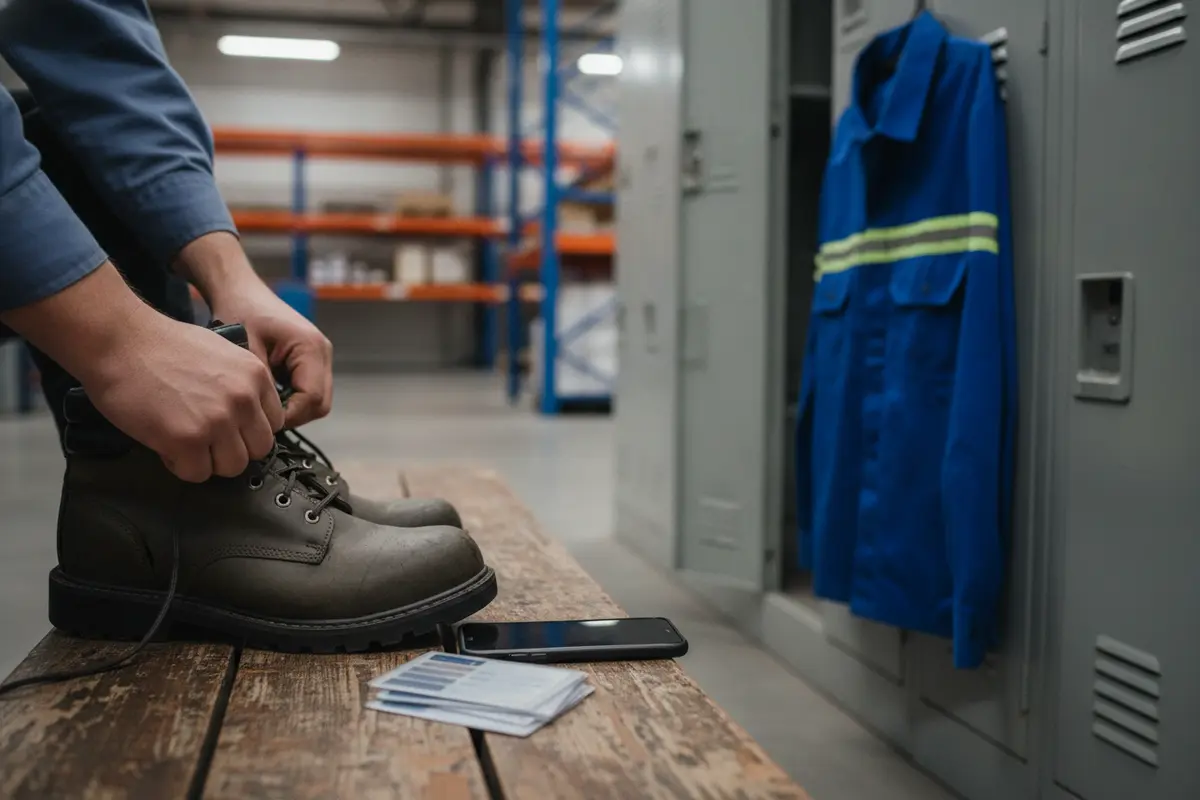
Onboarding should also cover site-specific expectations. Ask where to report, what identification or documents to bring, what clothing and footwear are required, how breaks work, and who to contact if you are delayed. If the assignment involves powered equipment, ask how authorization and evaluation work before operating it.
How can you succeed on the first shift?
Your first shift is a chance to show that you can learn the process and work safely. The following habits are simple but important.
- Arrive with enough time to park, check in, and reach the assigned area before the shift begins.
- Wear the required clothing and footwear. Do not assume that a site has every item available for you.
- Listen to the full instruction before starting. Repeat back the key destination, scan, or loading requirement if needed.
- Stay in approved pedestrian areas and watch for forklifts, pallet jacks, trailers, conveyors, and changing dock conditions.
- Keep freight labels visible and place items only in assigned lanes or locations.
- Report damage, missing labels, unsafe conditions, and equipment problems quickly.
- Ask for feedback near the end of the shift so you know what to repeat or improve.
Temporary workers should receive clear information about the work and safety expectations. The National Institute for Occupational Safety and Health discusses protecting temporary workers and the shared responsibilities involved in temporary employment in its guidance on protecting temporary workers. Read the site’s instructions, take required training seriously, and never use unfamiliar equipment without authorization.
Should you choose temporary, Temp To Perm, or Direct Hire work?
The best arrangement depends on your goals, the employer’s need, and the details of the opening. A temporary assignment may be useful when you want immediate experience or a short-term schedule. Flexible – Seasonal Staffing can fit a demand period while you evaluate whether the type of work suits you. Temp To Perm staffing can create a path toward permanent employment after an evaluation period, but conversion is not automatic. Direct Hire may be appropriate when the employer is ready to hire you directly from the beginning.
Ask what the staffing model means for this specific opening. Eclipse also provides Payroll or EOR Services for employers, which is a separate arrangement from a job seeker’s assignment. To understand the options, compare the explanation on Temp To Perm staffing with the information about Eclipse staffing services. Do not accept a label without asking about the expected duration, evaluation process, employer of record, and path after the assignment.
What should DFW employers know about cross-docking staffing services?
Employers planning a cross-dock workforce should define the operation before requesting candidates. Start with dock volume, inbound and outbound schedules, shift coverage, equipment, physical requirements, safety training, and the skills that are truly necessary on day one. Then decide whether the need is best addressed through temporary, seasonal, Temp To Perm, Direct Hire, or Payroll or EOR Services.
A useful staffing request distinguishes between must-have requirements and trainable tasks. For example, a current equipment authorization may be essential for one role, while scanning or lane procedures may be taught during onboarding. Include the facility location and expected start time so a staffing partner can assess commute and availability fit.
Eclipse’s model emphasizes proactive recruitment, screening, compliance support, and specialized light industrial staffing. Employers can learn about how light industrial staffing works, review on-site management options, and use the contact form to discuss a workforce need. Keep pricing consultative: the right service and assignment details determine the appropriate commercial discussion, so fixed rates should not be assumed from a general article.
Request a cross-docking staffing consultation for your DFW operation
How do you compare a staffing partner?
Whether you are an employer or a job seeker, ask practical questions before moving forward. A strong conversation should make the work, expectations, and next step clearer.
- Does the provider focus on warehouse, logistics, transportation, and manufacturing roles?
- How are candidates screened and matched to the actual assignment?
- What background-check, identity, E-Verify, and compliance steps apply?
- How are safety instructions and job-specific training handled?
- Who is the contact for schedule changes, questions, or an issue on assignment?
- How does the provider support communication between the worker and employer?
- For Temp To Perm work, what evaluation process and possible conversion terms should each party understand?
Employers can also review questions for vetting a staffing agency. Job seekers can read how a staffing agency works for job seekers before applying. These steps help both sides choose based on communication and fit rather than on a job title alone.
Frequently Asked Questions
What are cross-docking staffing services?
They are staffing solutions for distribution work in which goods move from inbound receiving to sorting, staging, and outbound loading with limited storage. Assignments may include dock work, scanning, sorting, palletizing, material handling, or approved equipment operation.
Do I need warehouse experience to apply?
Not always. Some jobs require specific experience or equipment qualifications, while others provide site training. Be honest about your background and emphasize reliability, safety, physical readiness, and your ability to follow instructions.
Where can I find cross-docking jobs near South Dallas?
Look at current listings and ask a local staffing provider about openings in Lancaster, DeSoto, Hutchins, Wilmer, South Dallas, Waxahachie, Ennis, Midlothian, and nearby communities. Availability changes, so confirm the location, shift, and transportation requirements for each assignment.
Can a temporary cross-dock job become permanent?
It can, when the opening uses a Temp To Perm model and the worker meets the employer’s expectations during the evaluation period. Conversion is a possibility, not a guarantee, so ask how the process works before accepting the assignment.
What should I bring to a warehouse interview or first shift?
Bring requested identification and employment documents, accurate work-history information, required clothing or footwear, and a reliable transportation plan. Also bring questions about the schedule, duties, training, safety expectations, and point of contact.
Cross-docking staffing services can be a practical route into DFW warehouse and logistics work when you understand the workflow, prepare for the requirements, and choose an assignment that fits your skills, schedule, and transportation plan.
