

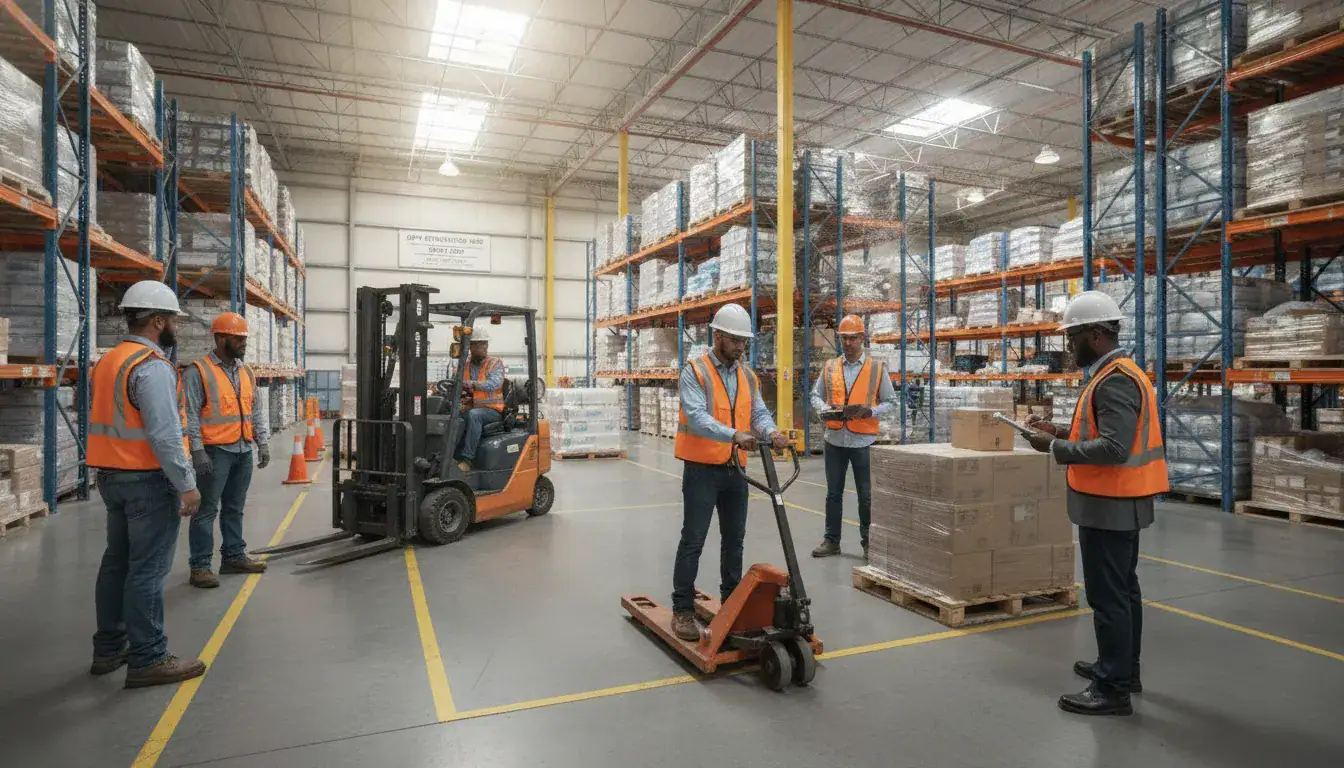
An empty forklift in a South Dallas warehouse costs employers hundreds of dollars every hour. Traditional resumes hide a candidate’s actual skills, which is why more DFW companies are turning to skill-based screening to protect their production lines. This data-driven approach replaces guesswork with verified abilities, helping you fill critical roles with qualified workers who can perform from day one.
Skill based candidate screening light industrial is a hiring method that uses standardized tests and hands-on assessments to measure a worker’s actual abilities rather than relying on paper resumes or interviews. For Dallas-Fort Worth employers, this means you can verify physical, cognitive, and safety skills before making a hiring decision, reducing turnover and improving workforce reliability across your warehouse, logistics, or manufacturing operations.
Need reliable warehouse or manufacturing workers in DFW? Contact Eclipse online or call (972) 685-7800 today for a free consultation.
To understand how this screening fits within your broader staffing strategy, start with how light industrial staffing works for DFW employers. Then read on to see how skill-based candidate screening can transform your hiring outcomes.
What Is Skill-Based Screening in Light Industrial Staffing?
Traditional hiring methods often fail when placing workers in modern warehouses and plants. Many employers rely on resumes to make fast hiring choices, but a resume only shows where a person worked, not what they can actually do on the floor. Skill-based screening changes this entirely. It is a data-driven method that evaluates a worker’s real hands-on abilities before they start, allowing managers to make better hiring choices based on proven capabilities rather than gut feelings.
| Aspect | Traditional Resume Hiring | Skill-Based Candidate Screening |
|---|---|---|
| Basis for hire | Past job titles and degree names | Verified hands-on skills and proven abilities |
| Candidate pool | Limited to those with specific credentials | Broadened to include skilled workers without degrees |
| Match accuracy | Based on gut feeling and interview impressions | Based on data from standardized assessments |
| Risk of bad hire | High, frequent mismatches lead to quick turnover | Low, candidates are tested for the specific role |
| Time to fill | Faster initial screen but more rehires needed | Slightly longer upfront but fewer repeat hires |
The Shift from Resumes to Proven Ability
In the past, a high school degree or a past job title was enough to get hired. Today, those credentials do not tell the whole story. Fewer than four in ten employers now view degrees as a true sign of talent, according to DPI Staffing, and roughly seventy percent of employers now use some form of skills-based hiring. This practice helps find workers who can perform on day one rather than relying on credentials that may have little bearing on actual job performance.
At Eclipse, we use our 4-step candidate screening process to verify hands-on skills. By combining hands-on testing with job-specific assessments, we help employers build stable, skilled workforces that avoid the high costs of bad hires and empty shifts.
Contact Eclipse Light Industrial Staffing at (972) 685-7800 today to find qualified, pre-screened workers for your Dallas-Fort Worth business.
Why Hands-On Testing Matters in DFW
The Dallas-Fort Worth metroplex is a major hub for logistics, distribution, and manufacturing. Industrial parks in Lancaster, DeSoto, and Waxahachie need steady labor to keep up with high demand, yet local businesses face severe labor shortages and high turnover. By focusing on real skills instead of degrees, businesses can broaden their candidate pools and tap into hidden talent. As research from MIT Sloan Management Review notes, skills-first practices help employers find new talent that traditional screening methods miss entirely.
Firms in South Dallas and Ellis County can discover workers who lack long resumes or degrees but possess the exact hands-on skills needed for warehouse work. Testing these skills removes the guesswork from hiring and keeps local production lines moving at plants in Red Oak, Ennis, and Midlothian.
How Do Skills Assessments Work in Light Industrial Hiring?
Setting up an effective screening system means looking past standard resumes. A modern assessment process uses a set of short, focused tests to verify real skills before a candidate ever steps onto your work floor.
Key Testing Stages
To determine whether a worker is ready, most screening systems follow a three-stage approach that evaluates both cognitive ability and practical capability:
- Cognitive and literacy testing: Standardized tests measure basic skills like reading, math, and the ability to interpret workplace charts. In technical roles, these standardized assessments help identify people who can read work orders and follow complex written instructions on the floor.
- Behavioral assessments: These quick tests measure soft skills and safety habits, including how a worker handles stress, works in teams, and follows safety protocols. Screening for these traits reduces bad matches and improves the workplace for everyone.
- Hands-on simulated work: Candidates perform simple, real-world tasks in a controlled environment. This stage might involve packing a box, counting inventory, or using a hand tool, allowing managers to assess a worker’s speed and attention to detail before they start on the clock.
Contact Eclipse at (972) 685-7800 or through our contact form to hire skilled light industrial workers for your DFW plant.
Symphony Talent Assessments
Eclipse makes this screening process simple and thorough through our partnership with Symphony Talent. Every job seeker completes a customized 1.5-hour screening process that includes Skill Check by Symphony Talent, a platform offering more than 500 job-specific, cognitive, and behavioral tests. We match these tests to the exact roles our clients need to fill in South Dallas and Northern Ellis County. For example, our assessments evaluate math proficiency and the ability to understand safety data sheets, ensuring every worker we send to a plant in Lancaster or DeSoto can perform well from day one.
Trial Hire Success
Testing skills before hiring works hand in hand with our temp-to-perm staffing model. By evaluating candidates first, you significantly reduce the risk of a bad hire and can observe how the worker performs during a trial period before making a full commitment. This double check protects your team from high turnover costs and gives DFW plant managers peace of mind knowing every worker on their floor has passed strict assessments, from skills testing to full E-Verify screening.
For a complete overview of how this fits into your overall hiring strategy, our guide to light industrial staffing for DFW employers explains the full process from workforce planning to placement.
What the Skill Check by Symphony Talent Evaluates
Eclipse uses the Skill Check platform by Symphony Talent to assess more than 500 discrete skills across cognitive, behavioral, and job-specific domains. This platform provides the reliable, data-driven screening that helps DFW employers find the right match on day one, lowering hiring risk and cutting training costs.
Job-Specific Capability Testing
Light industrial roles demand more than a standard interview can assess. Workers in a modern warehouse or manufacturing plant must have specific hands-on abilities, and Skill Check tests these with precision. Candidates take assessments for hand-eye coordination, tool operation, and safety protocols, demonstrating they can do the work before they are hired. For example, a forklift operator candidate might take a safety knowledge test, while an assembly line worker might complete a tool identification and sequencing assessment.
Cognitive and Behavioral Screening
A great worker needs both technical skill and sound judgment. Symphony Talent assessments measure how well candidates solve problems, follow instructions, and handle pressure. The system evaluates basic math and reading comprehension to ensure workers can follow written procedures, as well as attention to detail and teamwork capabilities. These data points allow Eclipse to predict on-the-job success with a high degree of accuracy.
- Basic math and reading: Determines whether a worker can read labels, count inventory, and understand work orders.
- Attention to detail: Measures how well a worker spots errors on a production line or during quality checks.
- Safety focus: Tests knowledge of common warehouse and industrial safety protocols.
- Team fit: Evaluates how a worker collaborates with others and handles routine workplace interactions.
Predicting Workplace Success
Using data to select staff creates measurable improvements. Organizations that use pre-employment skills assessments see significant reductions in turnover compared to those relying on interviews alone. When workers are placed in roles that match their demonstrated capabilities, they perform better and stay longer. For DFW employers, this means less hiring risk and the ability to scale teams with confidence.
Our team combines these assessments with the proven temp-to-perm staffing model, letting you evaluate a worker in a real environment before committing to a permanent hire.
How Skills Assessments Reduce Turnover for DFW Employers
High worker turnover costs Dallas-Fort Worth businesses thousands of dollars each year. Traditional resume checks and interview impressions often lead to poor matches on the shop floor, and employers who invest in screening can build stable teams that avoid the expense of constant rehiring.
Why Standard Interviews Fall Short
Standard interviews cannot measure the specialized skills needed for modern warehouse, assembly, or logistics jobs. These roles require practical abilities that verbal questions cannot verify. When employers hire without testing, they often face sudden quits and performance issues that disrupt operations.
Research from the University at Buffalo confirms that standardized testing provides more reliable hiring data than traditional interviews, helping employers identify candidates who are genuinely qualified for industrial roles. When candidates are placed based on verified abilities rather than resume credentials, they tend to stay longer and perform better.
The Temp-to-Perm Trial Period
Eclipse reduces hiring risks with a 520-hour temp-to-perm trial period that serves as a real-world evaluation on your shop floor. This try-before-you-hire model takes the guesswork out of your staffing decisions, letting you observe a worker’s speed, reliability, and attitude before making a permanent commitment. Focusing on verified skills rather than resumes helps employers discover hidden talent, and MIT Sloan research confirms that skills-first practices broaden applicant pools and lead to longer retention. DFW businesses can also leverage our flexible seasonal staffing solutions to manage demand fluctuations without the burden of high turnover.
Background Checks and Compliance
A complete screening process must also address legal and safety compliance. Eclipse protects your business by running thorough background checks and maintaining strict E-Verify compliance for every placement. This vetting ensures all workers are authorized to work and have cleared the necessary safety checks. Standardized tests give employers clear data to measure real skill and safety awareness, and when candidates are fully screened, they stay longer because the role is a genuine match.
What to Expect When Applying Through a Skill-Testing Agency
Applying for a new job can feel stressful, especially if you have a limited work history. Eclipse designed its screening process to identify your real strengths and match you to a position where you can succeed, whether you are an experienced worker or entering the workforce for the first time.
Steps in the Screening Process
- Submit an application: You fill out a simple form on our site. We focus on your skills and interests rather than just past job titles, helping us identify your true potential early in the process.
- Complete skills testing: You go through a 1.5-hour assessment using Skill Check by Symphony Talent, which includes over 500 job-specific tests. It evaluates math, reading comprehension, and your ability to follow work instructions.
- Background verification: We run a background check and confirm your work authorization through E-Verify. These steps ensure every job site remains safe and fully compliant.
- Case-by-case review: If you have a prior record, we review your history on an individual basis. Eclipse believes in second-chance hiring and evaluates your personal growth and current capabilities rather than disqualifying you based on past mistakes.
- Job matching: We match you with an employer in the Dallas-Fort Worth area using our temp-to-perm staffing model, allowing you to try the role before committing long-term.
A Case-by-Case Path for Every Worker
Eclipse understands that some workers face barriers because of their history. That is why our team evaluates background issues on a case-by-case basis. This second-chance policy means we look at who you are today and what you can contribute, not just the information on a background report. We work hard to match your current skills and work ethic to the right employer.
Why Matching Skills Leads to Job Success
When you are placed in a role that fits your actual abilities, you are far more likely to succeed and stay satisfied in the position. Pre-employment assessments like those used by Eclipse ensure the match is accurate and data-driven. If you are ready to find a great job in South Dallas or Ellis County, contact our team to get started today.
Frequently Asked Questions
Does using skill-based testing increase hiring costs?
No. While testing takes time upfront, it lowers overall costs by reducing bad hires and high turnover. Pre-employment assessments help employers make better hiring decisions that reduce the expense of constant rehiring. For Dallas-Fort Worth businesses, a temp-to-perm model provides a low-risk way to verify skills on the warehouse floor before committing to a permanent hire.
How does skill-based screening support diversity goals?
Focusing on what a worker can do rather than where they went to school helps build a more diverse team. Skills-first practices help employers discover new talent by expanding the candidate pool. This approach removes bias from the hiring process and connects industrial businesses with skilled workers from all backgrounds.
Can second-chance workers participate in skills testing?
Yes. Skill-based testing focuses on actual abilities rather than past mistakes or educational gaps. Eclipse evaluates backgrounds on a case-by-case basis while verifying that candidates have the specific skills needed for warehouse or assembly roles. Data-driven assessments allow managers to hire based on demonstrated ability rather than subjective judgment.
How long does a typical skills assessment take?
Eclipse uses a 1.5-hour screening process for each candidate. This includes Skill Check by Symphony Talent, which provides over 500 job-specific assessments covering cognitive abilities, behavioral traits, and hands-on skills relevant to light industrial roles.
Ready to Hire Skilled DFW Light Industrial Workers?
Every day your warehouse or manufacturing positions remain unfilled, you lose productivity and risk falling behind competitors who already have skilled teams in place. Eclipse Light Industrial Staffing combines rigorous skill-based candidate screening with a proven temp-to-perm model to deliver workers who are ready to contribute from day one. Contact us online or call (972) 685-7800 to schedule your free consultation and start building a stronger workforce today.
