
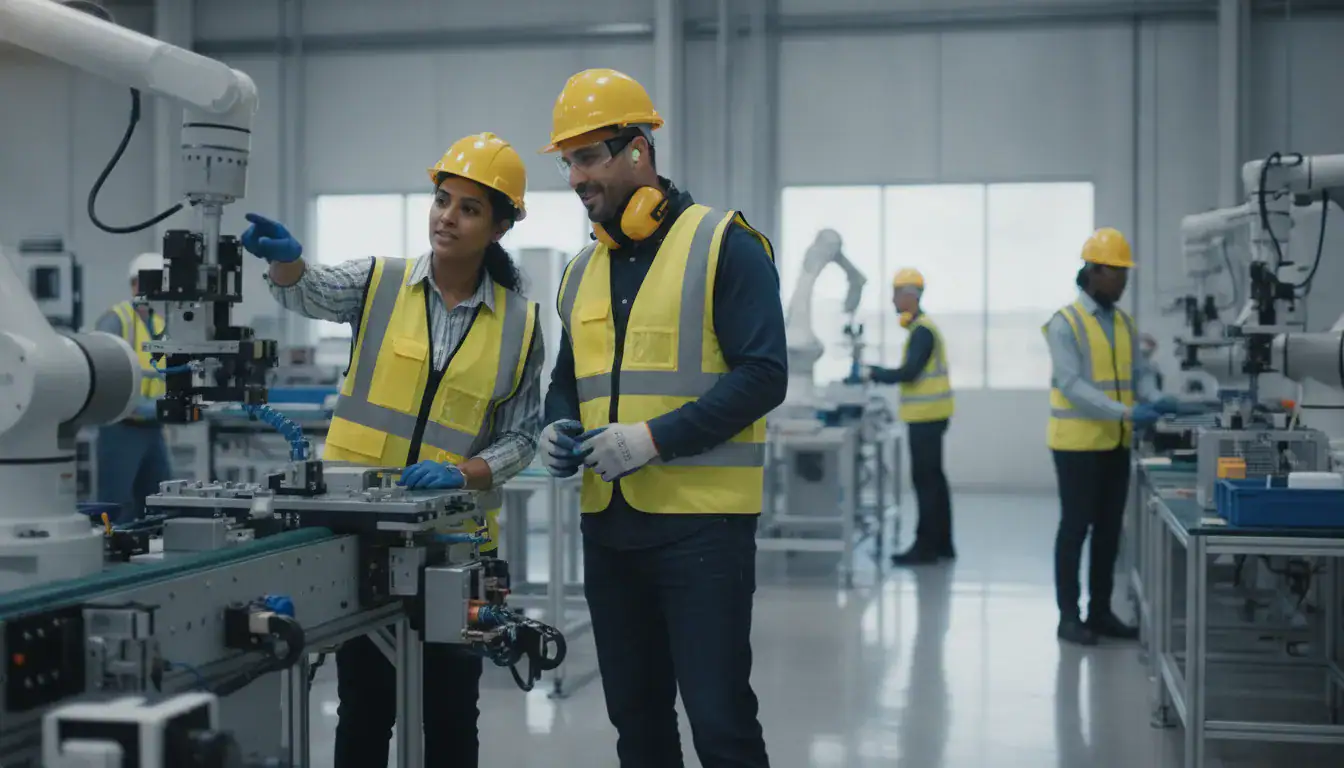
Hiring for a manufacturing role in Dallas-Fort Worth is not only about filling an open shift. The right staffing partner should understand the work, verify candidate readiness, communicate clearly, and help both sides evaluate whether the arrangement can become permanent.
When comparing manufacturing staffing agencies temp to hire, look beyond speed or price. Evaluate screening quality, manufacturing specialization, attendance and safety support, feedback practices, conversion terms, and local knowledge. A temp-to-hire role is a try-before-you-hire opportunity, but conversion depends on fit, performance, attendance, safety, and the employer’s ongoing business need.
Contact Eclipse to discuss your manufacturing staffing needs
For employers and job seekers in Lancaster, South Dallas County, and nearby DFW communities. A practical comparison starts with understanding what the arrangement includes and how expectations are set from the beginning. That foundation makes it easier to assess whether an opportunity is structured for a productive, informed evaluation.
What does temp-to-hire mean in manufacturing staffing?
Temp-to-hire, also called temp-to-perm, is a staffing arrangement that lets an employer and a candidate work together before deciding whether to make the role permanent. The staffing agency typically employs and supports the worker during the evaluation period, while the worker performs the responsibilities of the open manufacturing role. This gives both sides time to assess whether the position is a practical long-term fit.
For an employer, the evaluation is based on more than technical ability. Attendance, productivity, safe work habits, cultural fit, and the ability to learn all matter in a manufacturing environment. A candidate also gains firsthand experience with the facility, schedule, supervision, workload, and team. That two-sided process is why Eclipse describes the model as “try before you hire.” It creates room for informed decisions without assuming that every temporary placement will become permanent.
How the evaluation period works
The exact terms should be explained before the assignment begins. Eclipse documents a standard evaluation period of 520 hours, or about 13 weeks at 40 hours per week. Select roles may use a 330-hour period. These figures describe the evaluation framework, not a promise that conversion will occur at the end of the period.
During the assignment, the employer and staffing partner should track the criteria that determine whether conversion makes sense. Useful checkpoints include attendance and punctuality, productivity against role expectations, safety practices, learning progress, communication, and the worker’s fit with the operation. Regular feedback helps the candidate understand what is going well and where improvement is needed. It also gives the employer a clearer basis for deciding whether the role and worker should continue together.
What conversion does and does not mean
Conversion is conditional. It depends on the worker’s performance and fit, the employer’s ongoing business need, and the terms communicated by the staffing partner. Employers should ask how conversion potential is handled, when feedback is provided, and what steps follow if the assignment changes. Candidates should ask the same questions so they understand the evaluation criteria and do not mistake a temporary placement for a guaranteed permanent offer.
For a closer look at the model, review Temp To Perm staffing details before comparing agencies or accepting an assignment.
How should employers compare manufacturing staffing agencies temp to hire?
The strongest comparison looks beyond a fast candidate introduction. A manufacturing employer should assess whether an agency understands the role, screens for the work, communicates clearly, supports the first day, and manages the relationship after placement. Use the same questions with each provider so the decision reflects workforce reliability rather than a single promise or headline metric.
| Criterion | What to ask | What a useful answer includes |
|---|---|---|
| Manufacturing fit | Which roles and environments do you regularly support? | Specific experience with production, assembly, warehouse, or machine-operator hiring, plus a clear understanding of the job’s physical and operational demands. |
| Screening and matching | How do you verify that a candidate fits this position? | A defined screening process, skills verification, relevant assessments, and a matching conversation tied to the actual shift, duties, and expectations. |
| Speed and coverage | How do you respond when a role is urgent or a worker is absent? | A practical recruitment process, access to qualified talent, clear updates, and a plan for coverage without lowering qualification standards. |
| Attendance and performance | How will we track attendance, performance, and concerns? | Named points of contact, regular feedback, documented issue resolution, and a process for addressing problems before they affect production. |
| Conversion clarity | What does temp-to-hire evaluation involve? | Written expectations for feedback, evaluation criteria, conversion potential, and the transition process. Conversion should remain dependent on fit, performance, attendance, safety, and business need. |
| Local partnership | How familiar are you with our labor market and facility location? | Knowledge of the DFW corridor, realistic recruiting reach, and responsive support for employers in areas such as Lancaster and South Dallas County. |
Ask agencies to explain both their process and how they measure follow-through. Eclipse, for example, documents a four-step screening process and a 1.5-hour evaluation process. Its Skill Check by Symphony Talent access includes more than 500 job-specific, cognitive, and behavioral assessments. These details do not replace a conversation about your facility, but they show whether the agency has a repeatable method for evaluating candidates.
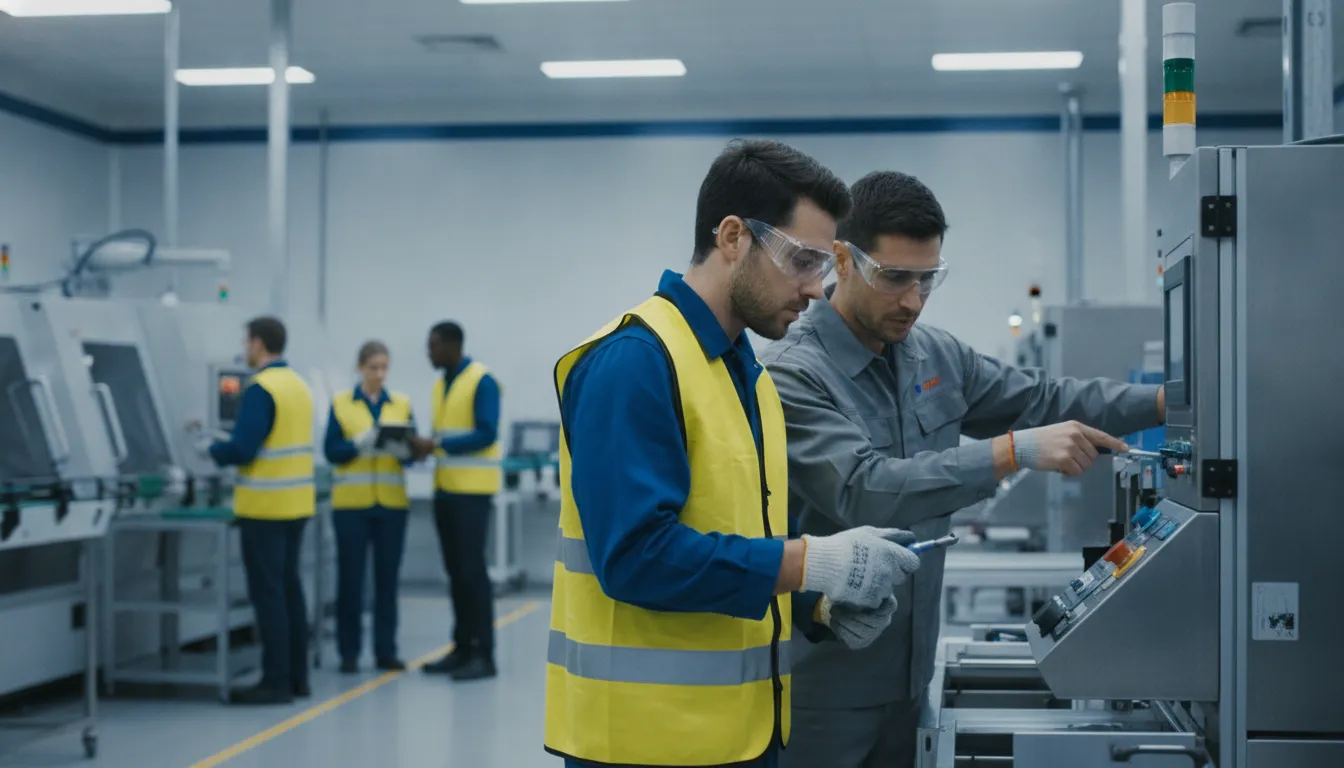
Speed should be evaluated in context. Eclipse’s service-delivery documentation reports an average four- to five-day time to fill supported by proactive recruitment and pre-vetted talent pools. When comparing that type of metric, ask what roles and conditions it covers, how the agency protects quality, and what communication you receive if the search takes longer.
Finally, review the agency’s support after the worker starts. Needs assessment, candidate matching, first-day support, attendance tracking, performance monitoring, issue resolution, and conversion management are all part of the relationship. Review the available DFW staffing services and look for evidence that the provider can stay engaged through the evaluation period. An agency’s local staffing expertise should be visible in its communication, recruiting reach, and understanding of your operating environment.
Which safety and compliance questions should you ask?
Safety should be part of the comparison before a manufacturing worker steps onto the floor. In a temp-to-hire arrangement, the staffing agency and the host employer are joint employers for purposes of providing and maintaining a safe work environment. That shared responsibility does not mean each party handles every task in the same way. It means the arrangement should be clear enough that important duties are not assumed, overlooked, or passed between teams.
Use these questions to test whether an agency can support worker qualification, documentation, and incident reduction, while keeping your own plant responsibilities visible.
- How will safety responsibilities be assigned in writing? Ask to see how the staffing agreement identifies responsibility for applicable OSHA requirements, site orientation, personal protective equipment, supervision, and reporting. OSHA recommends that the agency and host employer set out their respective compliance responsibilities in the contract. A clear allocation gives managers a practical reference when conditions change.
- Who provides the training, and when does it happen? Confirm which party provides general or role-related training and which party provides site-specific instruction. Ask how completion is documented before the worker performs the assigned task. The host employer understands the facility, equipment, and work process, while the agency should be prepared to coordinate its part rather than treating training as an informal handoff.
- How are hazards communicated to temporary workers? Ask how workers learn about chemical hazards, machinery risks, required protective equipment, restricted areas, emergency procedures, and the person to contact with a safety concern. The answer should address both the information supplied before placement and the site-specific communication provided after arrival. For context, OSHA’s interpretation of shared safety responsibilities explains that training and hazard communication generally involve both parties.
- How will incidents, near misses, and corrective actions be recorded? Ask who receives the initial report, who investigates, how records are maintained, and how corrective actions are communicated to the worker and supervisors. Recordkeeping should not begin only after a serious event. Consistent documentation can help both organizations identify recurring issues and determine whether a placement, process, or training approach needs adjustment.
- How will qualifications and changing job duties be verified? Confirm how the agency documents a worker’s relevant experience, assessment, and role fit. Then ask what happens if the assignment changes, new equipment is introduced, or production demands add a hazard. A worker qualified for one task should not be assumed qualified for another without an appropriate review.
- Who is the point of contact when a concern arises? Get names, response expectations, and an escalation path for attendance, unsafe conditions, injuries, or incomplete training. Ask how feedback from supervisors reaches the agency and how quickly the worker receives an answer. Strong communication supports accountability without shifting the host employer’s obligation to control its workplace.
These questions are not a substitute for professional legal or safety advice. They are a practical screening tool for deciding whether an agency’s process is documented, coordinated, and appropriate for the work involved.
What should a temp-to-hire candidate look for?
A temp-to-hire role should help you evaluate the workplace as much as the employer evaluates your work. Treat the assignment as a chance to ask questions, observe the operation, and decide whether the position fits your goals before you make a longer-term commitment. Eclipse describes this as a “try before you hire” model, giving candidates an opportunity to experience the workplace before committing. Learn more about temp-to-perm staffing and use these questions to assess an opportunity.
Confirm what the job actually involves
- What will I do during a typical shift?
- Which equipment, tools, or processes will I use?
- What schedule, attendance expectations, physical demands, and required skills apply?
- Who will train me, and who should I contact if I have a question?
Clear answers matter. The job description, interview, and first-day instructions should give you a realistic view of the work rather than a broad title with unexpected responsibilities.
Ask about training, safety, and feedback
Before starting, ask how orientation and job-specific training are handled. Find out how safety concerns are reported, what protective equipment is required, and how you will receive feedback. A responsible temp-to-hire process should make evaluation criteria and performance expectations clear. Regular feedback can help you correct problems early and understand how your attendance, productivity, safety, cultural fit, and ability to learn are being assessed. These are among the factors employers may consider before making a permanent commitment.
Understand conversion without assuming it is guaranteed
Ask whether the employer may offer direct employment, what the evaluation period is, and which conditions affect that decision. Eclipse documents a standard evaluation period of 520 hours, or about 13 weeks at 40 hours per week, while some roles may use a different period. Conversion remains conditional on fit, performance, attendance, safety, and business need. A staffing representative should explain the process and keep communication open rather than promise that every assignment will become permanent.
Consider the workplace and the commute
Notice how supervisors communicate, whether coworkers answer reasonable questions, and whether the pace and environment suit you. Also calculate the full commute, including traffic, parking, shift times, and transportation options. Opportunities may be available near Lancaster, DeSoto, Hutchins, Waxahachie, Midlothian, and other nearby DFW communities, but a manageable route is part of a sustainable job decision. Choose a role you can reach reliably and perform safely.
Contact Eclipse for help understanding employer opportunities
When is temp-to-hire the right workforce choice?
Temp-to-hire works best when an employer has an ongoing role to fill but wants real workplace evidence before making a permanent commitment. It creates room to assess attendance, productivity, safety, cultural fit, and the ability to learn while the candidate experiences the job and the work environment. That makes it useful for manufacturing teams where success depends on dependable daily performance, safe processes, and a practical fit with the plant or production culture.
The model is especially helpful when demand is steady enough to justify a long-term role. But the employer still has questions about fit, retention, or the skills required on the floor. It can also support a more deliberate decision when a manager needs to see how a worker handles the actual equipment, schedule, team structure, and expectations. Conversion is not automatic. It should depend on the worker’s performance, attendance, safety, fit, and the employer’s business need, with evaluation criteria and conversion potential communicated clearly.
How it differs from seasonal staffing
Flexible seasonal staffing is a better match when the workforce need is tied to a predictable demand spike. A project, or a period that may not justify adding a permanent position. Employers can use flexible seasonal staffing when the priority is coverage and workforce flexibility rather than evaluating someone for a long-term role. A seasonal assignment may end when demand changes, even when the worker performs well.
Temp-to-hire, by contrast, starts with a potential permanent position in mind. The employer is using the assignment to gather meaningful performance information before deciding whether to hire. The staffing partner should explain what will be evaluated and provide feedback during the assignment, rather than leaving both sides uncertain about what happens next.
When direct hire may be the better fit
Direct Hire can make more sense when the employer already has a clear job definition and established selection criteria. It is also practical when the employer has enough information to make a permanent hiring decision immediately. This option fits positions that require a direct employment relationship from the start and offer little value from an extended workplace evaluation.
These choices are not competing formulas for every employer. A manufacturing operation may use seasonal staffing for a short-term surge, Direct Hire for a clearly defined permanent opening. And temp-to-hire for a role where performance must be demonstrated in the workplace. The broader temp-to-perm versus direct hire discussion can help clarify that decision. The right choice is the one that matches the expected demand, the level of hiring uncertainty, and the evidence the employer needs before committing.
Why local manufacturing staffing support matters in DFW
Manufacturing employers do not operate in an abstract labor market. Commute patterns, facility locations, local hiring competition, and the needs of nearby distribution and logistics employers all shape how a staffing plan works in practice. A partner with documented knowledge of the Dallas-Fort Worth market can make those local conditions part of the conversation from the beginning.
Eclipse Light Industrial Staffing is headquartered in Lancaster, Texas and primarily serves DFW, with a concentration in South Dallas County and a roughly 30-mile service radius. That footprint includes the corridor around Lancaster and nearby communities such as DeSoto, Hutchins, Waxahachie, and Midlothian. For an employer comparing manufacturing staffing agencies temp to hire. This is a useful question to ask: can the agency demonstrate relevant reach around the facility, rather than simply list a broad regional market?

Local knowledge is not a substitute for a clear evaluation process. But it can support better alignment between an open role and the people who can realistically reach and work at the site. It also gives employers a more relevant basis for discussing workforce needs, whether they are hiring for manufacturing operations or related warehouse and logistics functions.
Eclipse focuses exclusively on light industrial staffing for warehouse, logistics, and manufacturing employers. Its documented service model includes Temp To Perm staffing, Flexible – Seasonal Staffing, and Payroll or EOR Services. That specialization helps keep the discussion centered on the operating realities of light industrial workplaces instead of treating manufacturing as one category among many unrelated sectors. You can learn more about Eclipse’s local staffing expertise and its approach to serving employers.
WBE certification may also be relevant for procurement teams with supplier-diversity or vendor-selection requirements. It does not replace the need to evaluate qualifications, communication, and fit, but it can be one part of a complete supplier review. Employers can then compare documented local reach, relevant specialization, and procurement considerations against their own workforce objectives.
Frequently Asked Questions
What should an employer ask a manufacturing staffing agency before starting a temp-to-hire program?
Ask how the agency screens and matches candidates, communicates attendance or performance issues, supports the first day, and defines conversion criteria. Also confirm who handles safety training, hazard communication, and recordkeeping, and make sure those responsibilities are clear in the staffing agreement.
Does every temp-to-hire manufacturing assignment become a permanent job?
No. Conversion is an option, not a guarantee. The decision typically depends on the worker’s attendance, productivity, safety performance, workplace fit, ability to learn, and the employer’s ongoing business need. Both sides should understand the evaluation period and what happens if conversion is not offered.
How can job seekers evaluate a temp-to-hire manufacturing role?
Before accepting, ask about the job duties, schedule, work environment, safety orientation, feedback process, evaluation criteria, and possible next steps. Consider whether the commute to the DFW worksite is practical and whether the assignment gives you a realistic opportunity to demonstrate reliable performance.
Why does local experience matter when comparing agencies in DFW?
A locally focused agency may better understand hiring conditions, commute patterns, and employer needs across the Lancaster and South Dallas County corridor. Ask where the agency regularly serves, how it communicates with nearby worksites, and whether its manufacturing focus matches the role you need to fill or want to pursue.
Are staffing agencies and manufacturing employers both responsible for worker safety?
Generally, yes. OSHA identifies the staffing agency and host employer as joint employers responsible for a safe work environment, including training, hazard communication, and recordkeeping. Review the specific division of responsibilities before work begins: OSHA’s guidance explains the shared obligations.
Ready to compare your staffing options?
Choosing a manufacturing staffing agency for temp-to-hire roles is easier when you can discuss your workforce needs. Hiring goals, and local operating context with a team that understands the DFW market. Eclipse can help you evaluate a practical path for manufacturing, warehouse, logistics, or transportation staffing without relying on a one-size-fits-all approach.
