


If you are searching for a forklift license in Texas, the key point is that forklift operators generally need employer-provided training and certification for the powered industrial truck they will use—not a single state-issued license that automatically qualifies them for every job. That distinction matters for job seekers and for employers comparing supply chain staffing solutions DFW. Training, practical evaluation, and workplace-specific authorization all play a role in safe operation.
Talk with Eclipse about your DFW workforce needs
Does Texas issue a forklift license?
People often use “forklift license” as shorthand for proof that an operator has completed training. In the federal workplace rules cited here, the emphasis is on operator training, evaluation, and certification by the employer or organization—not a universal state license card. A certificate from a course can document training, but it does not necessarily authorize someone to operate every truck in every workplace.
The U.S. Occupational Safety and Health Administration (OSHA) says powered industrial truck operators must be trained and certified by their organizations. Each operator’s performance must also be evaluated at least once every three years. The training and evaluation need to match the truck and the work conditions. Read OSHA’s Powered Industrial Trucks training guidance for more detail.
For Texas employers and workers, the Texas Department of Insurance also describes training before or at the time of an employee’s initial assignment to forklift use in its Powered Industrial Trucks workplace program. Follow applicable workplace requirements and the employer’s safety procedures. Do not treat a wallet card alone as a substitute for equipment- and site-specific preparation.
What does forklift operator training cover?
Good training combines instruction with hands-on practice. The specific content depends on the truck and the tasks, but operators should learn how to use the controls, handle loads, travel safely, and recognize hazards in the work area. The point is not just to pass a brief class. An operator must be able to demonstrate safe performance in the conditions where the work will happen.
- Truck knowledge: Identify the truck’s controls, capacity information, operating characteristics, and limits. A sit-down counterbalance truck and a narrow-aisle lift do not handle the same way.
- Load handling: Understand load stability, proper fork positioning, visibility, and how load size or placement affects control. Never assume a load is safe simply because it fits on the forks.
- Travel and maneuvering: Practice starting, stopping, turning, backing, and moving through aisles and intersections at a controlled speed. Keep a safe distance from people and other equipment.
- Workplace hazards: Learn the site’s traffic routes, pedestrian areas, dock edges, ramps, floor conditions, overhead obstructions, and any restricted zones.
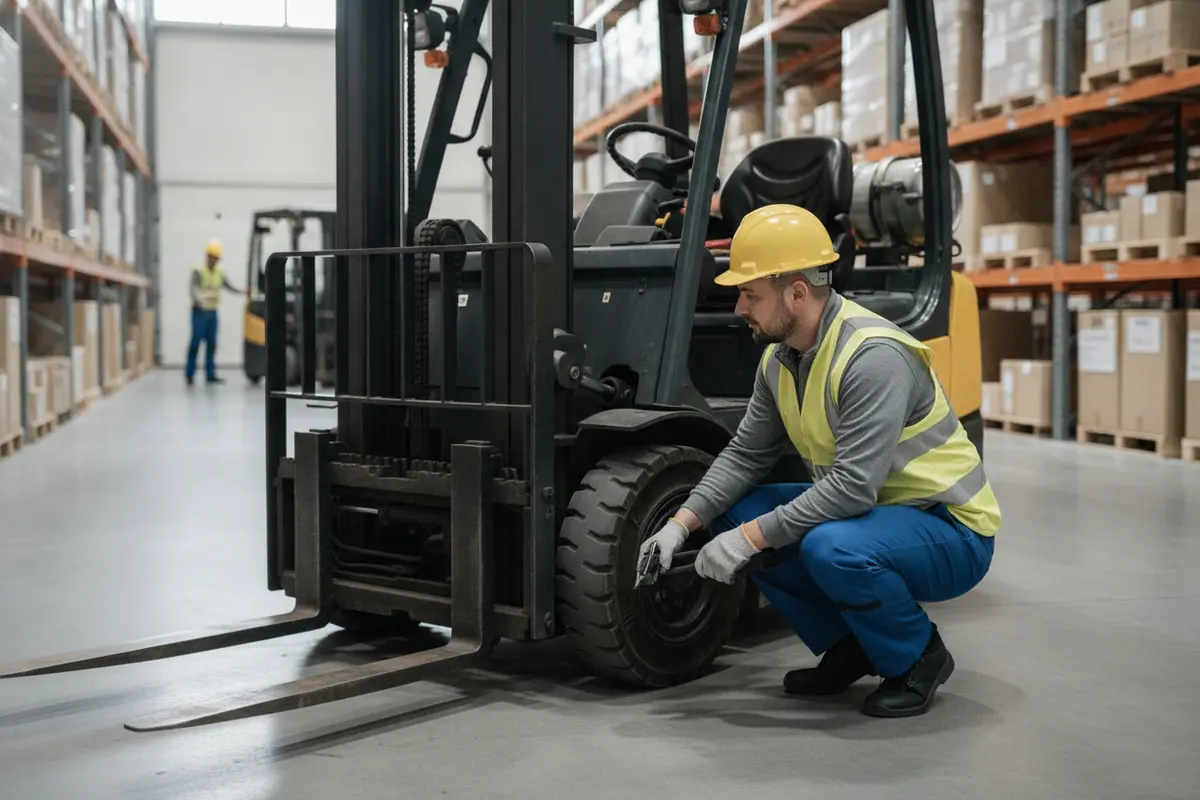
- Pre-use checks: Know how to inspect the equipment, identify a defect, and follow the employer’s process for reporting and removing unsafe equipment from service.
Employers should connect formal instruction to the actual operation, rather than assume a general class covers every task. A worker moving pallets inside a warehouse may face different conditions from someone loading trailers or handling materials in a manufacturing area. Good onboarding gives the operator time to ask questions and practice before taking on a task independently.
How do training, evaluation, and certification work?
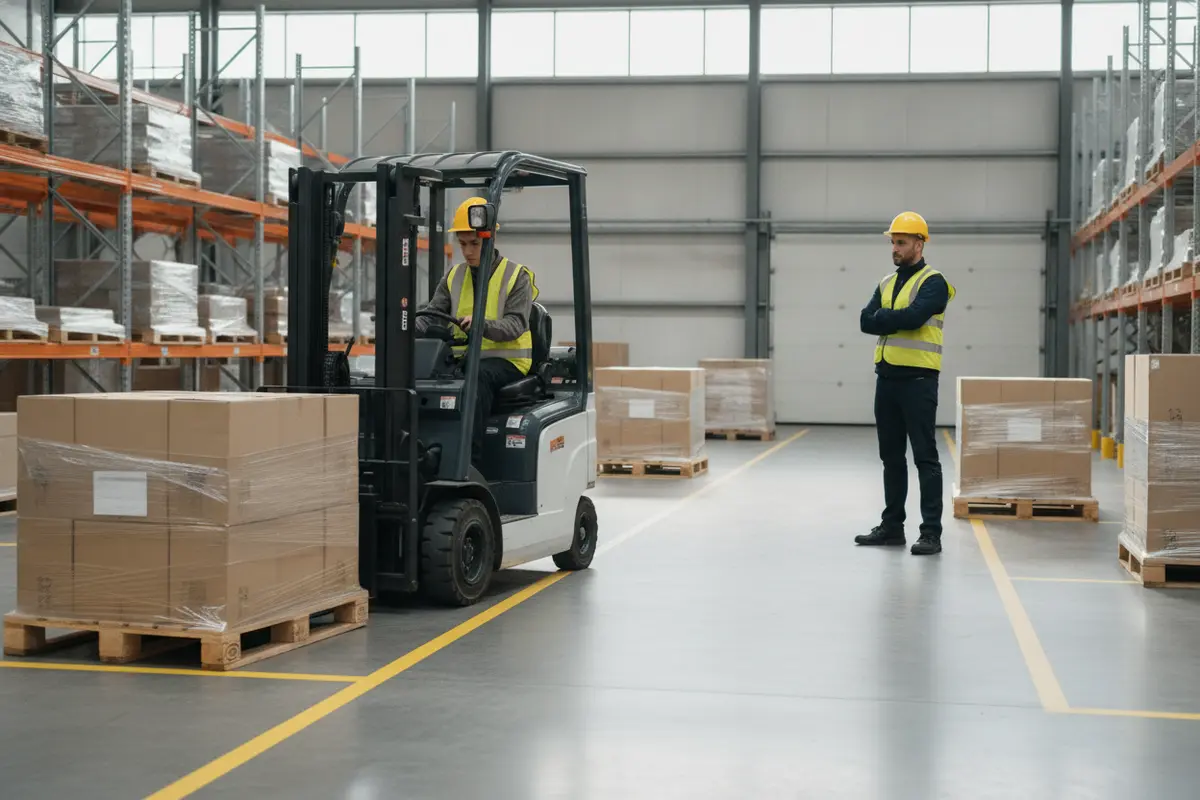
The process usually has three connected parts: instruction, practical evaluation, and employer certification. Training explains safe operating principles and job-specific hazards. A qualified evaluator then observes the operator demonstrating the required skills. Once the employer confirms the operator has completed the required training and evaluation, the organization certifies the operator for the relevant equipment and work setting.
- Identify the equipment and job. Before training, clarify the truck type, load, work area, shift, and tasks. Ask whether the job involves docks, narrow aisles, ramps, outdoor surfaces, or frequent pedestrian traffic.
- Complete instruction. Review the truck’s operation and the hazards that apply to the job. Ask for an explanation if a control, capacity marking, or site rule is unfamiliar.
- Practice under supervision. Demonstrate the job’s expected maneuvers and safe work practices with an instructor or evaluator observing. Do not rush the practice stage.
- Be evaluated on the actual work. The evaluator checks performance and identifies areas that need further instruction. If a skill is not yet consistent, additional practice and evaluation may be needed.
- Confirm the employer’s certification and records. Ask what equipment and workplace the qualification covers, and how the employer handles refresher training or changes in assignment.
A course completion document may be useful evidence of prior learning, but a new employer should still determine whether the training matches its truck and operating conditions. Employers remain responsible for ensuring operators are trained, evaluated, and authorized for their work. OSHA’s training resource outlines employer responsibilities and circumstances that can call for additional training or evaluation, including unsafe operation, an accident or near miss, a different type of truck, or changed workplace conditions.
Explore current light industrial job openings with Eclipse
What should you expect during a practical evaluation?
An evaluation should reflect the tasks involved in the job, not just a quick ride around an empty floor. A prospective operator may be asked to inspect the truck, start and stop safely, move a load, steer through a defined route, and park or secure the equipment according to site procedures. The evaluator should be able to see whether the worker is in control and follows safe practices throughout the task.
For job seekers, a calm, methodical approach matters. Listen to the full instruction before moving. Ask the evaluator to repeat a direction if it is unclear. Keep your attention on the path, use the required safety equipment, and follow the worksite’s pedestrian and traffic rules. If you have not used a particular truck model or attachment, say so rather than guessing.
For employers, document the scope of the evaluation and any additional coaching. A short checklist can help supervisors keep the process consistent across new hires and assignments. Include the equipment type, relevant work conditions, date, evaluator, skills observed, and any next steps required. Documentation supports a clear handoff between recruiting, onboarding, and floor supervision.
Which proof should job seekers bring to an interview?
If you have completed forklift training before, bring any course record or operator card you have, along with a clear description of the equipment you used and when you last operated it. Be ready to explain the work you performed, such as moving palletized goods, replenishing shelves, loading trailers, or working in a production area. Be honest about the limits of your experience.
Prior training can help an employer understand your background, but it should not be presented as a guarantee of authorization at a new site. A hiring employer may need to verify your skills, provide site-specific instruction, and evaluate you before assigning equipment. That is normal preparation, not a sign that your earlier experience has no value.
If you are seeking warehouse or logistics work in South Dallas, Lancaster, DeSoto, Hutchins, Wilmer, Waxahachie, Ennis, or Midlothian, you can review local warehouse and forklift job opportunities and prepare a concise record of your experience. Eclipse supports light industrial employers and job seekers across the DFW area; availability and role requirements vary by assignment.
How can you prepare for training before the first shift?
Whether you are a job seeker or a supervisor, preparation makes the training process easier to follow. A candidate can review basic forklift vocabulary and think through prior work examples, but should not try to teach themselves to operate equipment from videos or informal practice. Hands-on operation belongs in a properly supervised training and evaluation process. If you have a certificate, bring it; if you do not, be clear about your experience and ask what the employer requires before the assignment begins.
Employers can make training more useful by sharing the specific job description with the person who will train and evaluate the operator. Include the truck type, attachments if any, typical load, route, shift, and conditions such as dock work or pedestrian traffic. If workers rotate among different types of trucks or locations, identify that during planning. A qualification on one truck type should not be casually assumed to cover another type or changed operating conditions.
Build enough time into onboarding for instruction, supervised practice, questions, and evaluation. A production target should not push a new operator onto equipment before the employer has confirmed readiness. Supervisors should know who to contact if the worker needs more practice, reports a defect, or is asked to perform a task outside the original assignment. Clear escalation steps help a worker pause and ask for direction without guessing.
Keep a simple record of the process. Depending on the employer’s record system, it can capture the operator, date, trainer or evaluator, equipment category, workplace or assignment, topics covered, evaluation outcome, and follow-up needed. Make sure the people assigning work can tell what the record actually covers. Review it when there is a new truck, a change to the work area, an incident, or a performance concern, and use applicable rules and internal procedures to decide whether further instruction or evaluation is needed.
For job seekers, asking about onboarding is reasonable. You might ask: “What truck type does this role use?”, “Will there be site-specific instruction?”, and “Who evaluates operators before they work independently?” These questions show that you take the assignment seriously. They also help you decide whether your experience matches the work or whether you will need supervised training first.
How should employers compare forklift staffing options?
When comparing supply chain staffing solutions DFW, an employer should look beyond whether a candidate says they have a license. Define the equipment and work first, then confirm how the staffing or hiring process will assess relevant experience, communicate site rules, and handle training and evaluation responsibilities. Clarify who will provide instruction, who evaluates performance, and how new assignments or equipment changes are addressed.
| Approach | What it can help with | What to confirm |
|---|---|---|
| Direct hire | Recruiting a worker for a direct employment relationship | Who verifies experience, conducts the site evaluation, and provides any required job-specific training? |
| Temp To Perm staffing | Evaluating a worker on the job before considering a permanent transition | Agree on performance expectations, feedback, supervision, and how the evaluation period works. |
| Flexible – Seasonal Staffing | Adding workers during a defined demand increase or seasonal period | Plan the orientation, shift coverage, equipment access, and supervisor capacity before the peak. |
| Payroll or EOR Services | Arranging payroll or employer-of-record support while the client directs daily work | Document each party’s responsibilities for safety communication, site access, and assignment changes. |
These models address different workforce needs; none removes the need for a safe workplace, proper supervision, or required operator preparation. For example, a temp-to-perm arrangement may give a supervisor time to observe reliability and work habits, but it does not replace the specific operator training and evaluation required for the equipment. Employers considering a longer evaluation path can read about Eclipse Temp To Perm staffing and its 520-hour evaluation period.
How can DFW employers prepare before a forklift assignment starts?
A brief planning conversation can prevent confusion on the first shift. Write down what the worker will actually do and what equipment they may operate. Share the site’s arrival instructions, shift schedule, required protective equipment, traffic patterns, and the person who will provide first-day direction. Be specific about whether the job involves shipping and receiving, order fulfillment, production support, or another warehouse task.
- Describe the role clearly. Specify the physical work, shift, environment, equipment, and experience level. Avoid treating all “forklift experience” as interchangeable.
- Set the skill threshold. Identify which tasks require prior experience and which can be taught through supervised onboarding.
- Plan site orientation. Show new workers pedestrian routes, emergency procedures, restricted areas, and the right contact for safety questions.
- Arrange evaluation and follow-up. Name the person responsible for observing operation and addressing gaps before independent work begins.
- Keep communication open. Tell the staffing partner promptly if the assignment, truck, work area, or shift changes so responsibilities and preparation can be reviewed.
For a multi-shift operation or seasonal ramp-up, include these steps in the staffing plan instead of waiting until the first worker arrives. A partner that understands warehouse, logistics, transportation, and manufacturing work can help employers define the role and coordinate recruiting. Eclipse provides light industrial staffing services in the DFW market, including Flexible – Seasonal Staffing, Payroll or EOR Services, and other staffing services.
What should you do if you need more training?
Do not operate a truck if you are unsure how to use it safely or have not received the preparation required for the assignment. Tell your supervisor or employer what you have and have not done, and ask who can provide instruction and evaluation. If a truck, attachment, route, or work condition is new to you, raise that before beginning the task.
Employers should respond to skill gaps with coaching, additional instruction, or a different assignment as appropriate. OSHA’s guidance also points to refresher training and evaluation when certain conditions arise, rather than relying indefinitely on a past course record. A safe process treats questions and retraining as part of managing equipment—not as a reason to conceal uncertainty.
Job seekers looking for additional industrial work can check Eclipse’s job listings and describe their training honestly. Employers can contact Eclipse to discuss a staffing plan that fits their workforce requirements. For information about the company’s local focus and approach, visit Eclipse’s About page.
Request a conversation about your DFW staffing needs
Ready for your next step?
A forklift card can be a useful record, but readiness comes from training, evaluation, and authorization matched to the truck and workplace. Job seekers should describe experience accurately and stay open to site-specific preparation; employers should plan for safe onboarding as part of their supply chain staffing solutions DFW.
